


How To Choose The Right Ultherapy Clinic in Singapore (2026 Guide)
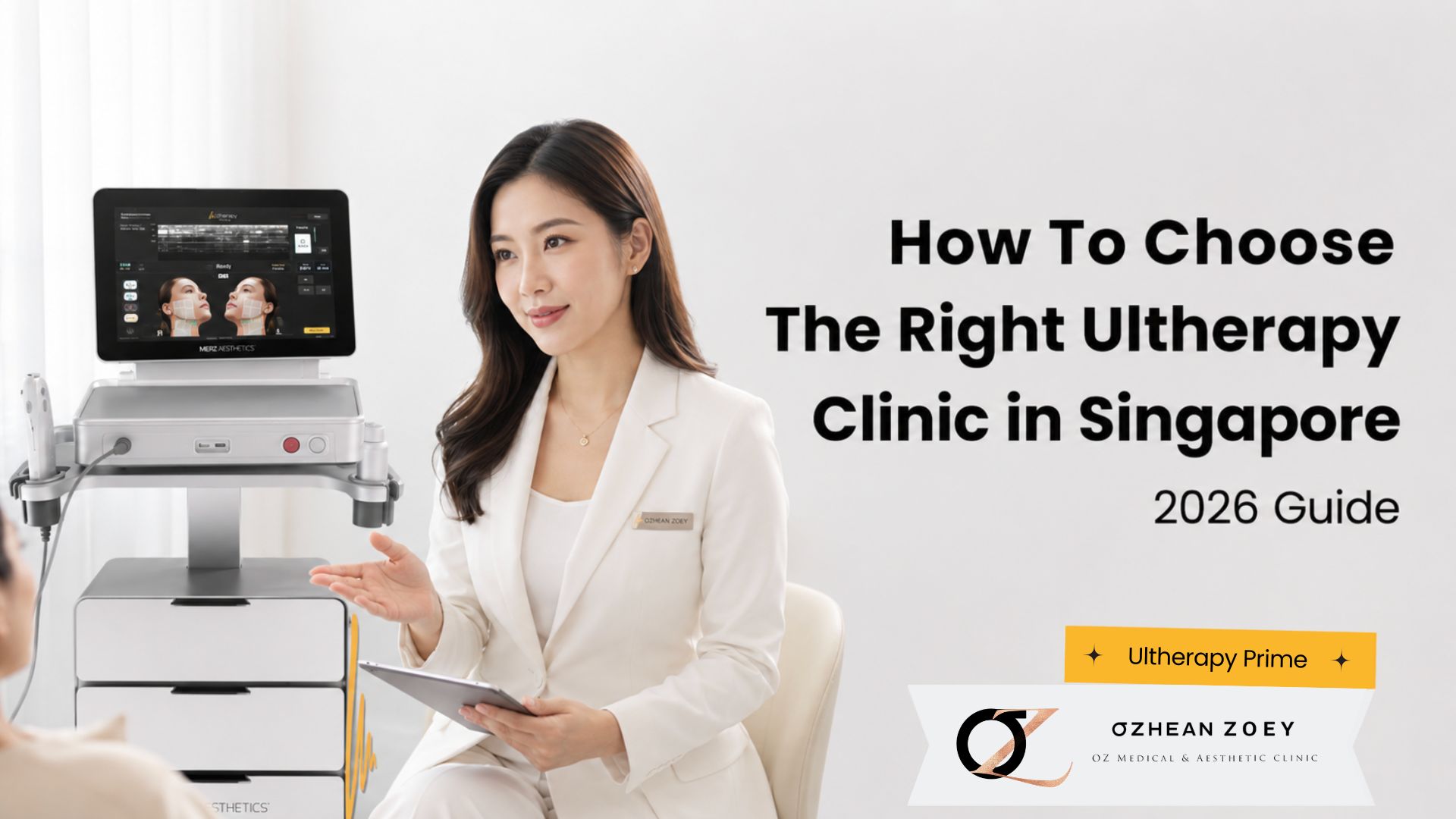
Choosing an Ultherapy clinic in Singapore? The machine is identical everywhere. The treatment plan is not. Here is what actually decides your result.
Every clinic in Singapore running Ultherapy Prime is running the same machine. Same transducers. Same energy. Same real-time imaging. So when one clinic quotes you a lower price per shot than another, the logic seems obvious: it is the same machine, so buy the cheaper shots.
It is a completely reasonable assumption. It is also the single most expensive mistake patients make when choosing an Ultherapy clinic in Singapore.
Here is why. A shot of ultrasound energy is not a product. It is an instruction. And an instruction only produces a result if somebody has decided — correctly, in advance — where it should land, how deep, in what direction, and how many times. Fire the same energy into the wrong plane and you have not bought a cheaper lift. You have bought heat with nowhere to go.
This guide breaks down what genuinely separates one Ultherapy clinic from another, what questions to ask before you book, and — honestly — where Ultherapy Prime stops being enough on its own.
The "same machine, same result" assumption — and why it collapses
Two clinics both own a pico laser. Same platform, same wavelengths, same fluence range. Do they produce the same result on your melasma? Ask anyone who has been treated at both. One doctor recognises melasma and treats it conservatively at low fluence with a long horizon. The other treats it like a sunspot, pushes the energy, and triggers a rebound flare that takes eighteen months to settle. Same laser. Opposite outcomes.
Formula One makes the point even more sharply. Two drivers, one team, one garage, one car built to the same specification, bolt for bolt. One of them wins the championship. The other struggles to reach the podium. Nobody watching concludes that the car was the variable.
The machine is a component. The result is authored by the person driving it.
This is not a marketing position. It is in the literature. A 2020 retrospective study in Dermatologic Therapy evaluated a micro-focused ultrasound device on lower-face laxity in 24 patients. Assessed by two blinded dermatologists on paired photographs, only around 21% of patients showed improvement. Roughly 63% showed no change at all — and 17% were scored as worse than before treatment.
Set that against the strongest evidence for micro-focused ultrasound with visualisation. A 2025 systematic review and meta-analysis in the Aesthetic Surgery Journal pooled 42 studies and found that 89% of patients demonstrated some degree of investigator-rated global aesthetic improvement, with an 84% patient satisfaction rate.
Same modality. Same anatomical region. The gap between "17% got worse" and "89% improved" is not explained by the machine. It is explained by visualisation, by assessment, and by the plan.
What Ultherapy Prime actually does differently
Ultherapy Prime is a micro-focused ultrasound with visualisation (MFU-V) platform. It delivers focused ultrasound energy to a precise depth beneath the skin, where it creates thermal coagulation points — tiny, controlled zones of heat that trigger the body's wound-healing response and, over the following three to six months, lay down fresh collagen and elastin. This mechanism was first described in the Archives of Facial Plastic Surgery in 2007, when researchers demonstrated selective thermal injury zones created within the SMAS — the same fibrous layer a surgeon manipulates during a facelift.
In Mandarin, the treatment is commonly searched as 超声波拉皮 (chāo shēng bō lā pí) — literally, ultrasound skin lifting.
Now, the part that gets misstated. Many ultrasound lifting devices offer transducers at 1.5 mm, 3.0 mm and 4.5 mm. Depth options are not rare. What is rare is being able to see the tissue before you fire into it.
Ultherapy Prime carries integrated real-time ultrasound imaging. The doctor watches your actual skin, fat and fascial layers on screen and confirms the target sits inside the focal zone before a single line of energy is delivered. Without that image, the operator is selecting a depth based on an assumption about your anatomy — an assumption that is wrong more often than most patients would like to know, because facial fat thickness varies by centimetres between two people of the same age and the same weight.
Firing a 4.5 mm transducer into someone whose SMAS sits at 3.8 mm does not deliver a stronger lift. It deposits energy into fat. That is not a lift. Over-treated at depth, in the wrong plane, is how you get volume loss in a face that came in asking for tightening.
Visualisation is what converts a shot into a targeted shot. It is the reason Ultherapy Prime sits in a different category from ultrasound devices that fire blind.
Three transducers, three different jobs
The precision argument only becomes real when you understand that the three transducers are not three intensities of the same treatment. They are three different treatments, targeting three anatomically distinct layers.
1.5 mm — the skin
Delivers energy into the superficial dermis. This is the transducer for skin quality: fine lines, crepiness, texture, pore refinement, and the delicate periorbital skin around the eyes. It does not lift. It refines.
3.0 mm — the reticular dermis and superficial fat
Targets the deep reticular dermis and the superficial subcutaneous fat compartment. This is the contouring transducer. In a face carrying heavy malar or jowl fat, this is the depth that reshapes. In a thin face with no fat to spare, aggressive use here is exactly what you do not want.
4.5 mm — the SMAS
Reaches the superficial musculoaponeurotic system, the structural scaffold that surgeons tighten and reposition during a facelift. This is the lifting transducer. It is also the one with the least margin for error, because it sits closest to nerves and to structures you must navigate around rather than through.
One transducer refines. One reshapes. One lifts. Three completely different clinical intentions.
Which raises an uncomfortable question about the shot-count model of pricing: if a clinic quotes you 600 lines at an attractive price without first establishing what those lines are meant to achieve, what exactly did you buy?
The first question we ask — and it is not "how many shots?"
When a patient sits down with one of our doctors and says they are considering Ultherapy Prime, the first question is never about shot count, package size, or which promotion is running.
It is: what are you actually here for?
Skin tightening? Fat reduction and contour? Lifting?
Most patients have never been asked to separate those three, because in ordinary conversation they collapse into one word — "tighter". Clinically they are three different problems requiring three different depths, three different vectors and three different energy distributions.
A patient in her mid-thirties with good skin and mild early laxity along the jawline needs a plan weighted toward SMAS and reticular dermis, with minimal superficial work. A patient of the same age with thin skin, visible crepiness and no meaningful sagging needs almost the inverse. Give both of them the same 600-line "full face package" and you will delight one and disappoint the other — with the same machine, on the same afternoon, at the same price.
This is why our doctors design a bespoke plan against a stated goal, and it is why our Ultherapy Prime outcomes are consistent enough for us to be comfortable putting this in writing. The plan is the product. The machine is the tool that executes it.
Reading the face before firing a single line
A Formula One driver does not arrive at a circuit and start racing. They walk the track. They study the corners, the camber, the braking zones, the surface. The car has not changed. Their knowledge of the course is what makes the car fast.
Our assessment is the track walk. Before a plan exists, our doctors examine:
- Skin thickness — which determines whether the 1.5 mm transducer refines or irritates
- Fat distribution, compartment by compartment — because facial fat is not one continuous cushion but a set of discrete pads that descend at different rates
- Where the laxity actually lives, and in which direction it is falling — laxity has a vector, and treating against it wastes energy
- The eyes: brow position, upper-lid heaviness, and how alive the gaze reads — often the single feature that decides whether a face looks tired
- Bone support and volume loss, which frequently masquerade as sagging and will not respond to tightening at all
Only then does a treatment plan get written: which transducer, in which zone, along which vector, and how many lines each. This is the discipline behind the See.Plan.Treat. protocol we follow at Ozhean Zoey, and it is the technical work that separates two clinics holding identical equipment.
Or, stripped of all technicality: the result is the difference. It always was.
More shots, or more results?
Treating every Ultherapy clinic in Singapore as interchangeable is a simplistic way to make a decision about your face. It optimises the one variable that is genuinely identical everywhere — the hardware — and ignores every variable that is not.
So before you compare quotations, ask yourself a better question.
Do you want more shots on your face, or do you want more results? And what results, specifically? Those are the questions that will tell you which clinic to choose, and they are the questions a good doctor will ask you before you think to ask them.
The honest ceiling: what Ultherapy Prime cannot do alone
Here is the part most clinic websites will not tell you: Ultherapy Prime is not a wonder tool.
Ultherapy Prime works beautifully for patients in their thirties and forties, where ageing is still well controlled, laxity is mild to moderate, and the underlying structure is intact. In this group, a well-planned session produces the kind of lift that looks like nothing was done at all — which is the entire point.
From the fifties onward, or in anyone whose ageing has been accelerated by chronic stress, poor sleep, significant weight fluctuation or sun exposure, expectations need recalibrating. Ultherapy Prime does not remove excess skin. It cannot reposition a face that has descended structurally. It stimulates your own collagen, and collagen synthesis slows with age.
Across our group, we have not observed Ultherapy Prime alone correct more than roughly 40% of established laxity in a single treatment course. That figure is our clinical observation across our clinics, not a published statistic — and we state it plainly because it is more useful to you than a promise.
So if your expectations are higher than that — and for many patients over fifty, they reasonably are — the decisive question when choosing a clinic is no longer "how much per shot?"
It becomes: does this clinic have a combination protocol that can take me past the ceiling of the device?
The real differentiator: does the clinic have a protocol beyond the machine?
A clinic that only owns a lifting device can only sell you lifting. A clinic that understands facial ageing as a layered problem will treat it in layers — and the published evidence supports exactly this.
Combination work with micro-focused ultrasound is one of the better-documented strategies in aesthetic medicine. Casabona and Nogueira, writing in the Journal of Cosmetic Dermatology in 2018, reported improved neck and décolletage laxity when micro-focused ultrasound was combined with diluted calcium hydroxylapatite. Kerscher and colleagues reported comparable clinical and biophysical gains from the same pairing in Dermatology and Therapy in 2019. A 2025 narrative review in the Journal of Cosmetic Dermatology summarised work by Bartsch and colleagues showing that ultrasound combined with diluted calcium hydroxylapatite, followed by staged subcision, produced the highest odds of at least a full grade of laxity improvement at nine months.
Energy rebuilds and tightens the scaffold. Biostimulators rebuild the matrix the scaffold sits in. Volume restores the support that tightening alone cannot manufacture. Treat one layer and you get one layer of result.
At Ozhean Zoey, our lifting protocols are built on three additional pillars alongside Ultherapy Prime, each with an established clinical rationale:
- PCL collagen stimulators — polycaprolactone, a long-acting biostimulator that drives sustained neocollagenesis and restores structural support in areas where tightening alone leaves the face flat
- CaHA (calcium hydroxylapatite) — the combination partner with the strongest published pairing data alongside micro-focused ultrasound, used both for lift vectors and, in diluted form, for skin quality and firmness
- Re20 — our extracellular matrix booster, which addresses the quality of the dermal matrix itself rather than its position, so that lifted skin also looks like healthy skin
These are sequenced deliberately, not stacked on the same afternoon for convenience. Sequencing, dilution and interval are where the clinical judgement lives.
Our recommendation, stated as plainly as we can: choose a clinic whose results go beyond what Ultherapy Prime can deliver on its own. Ask to see their portfolio of lifting outcomes. Ask whether they treat you or treat the machine. Ask whether they know how to give you the specific result you came in for.
Seven questions to ask any Ultherapy clinic before you book
- Will a doctor assess my skin thickness, fat distribution and laxity vectors before quoting me a shot count — or does the package come first?
- Which transducers will be used on which zones of my face, and why those?
- Is real-time visualisation actually being used during my treatment, or only mentioned in the marketing?
- Given my age and degree of laxity, what result is realistic with Ultherapy Prime alone?
- If that is not enough for my goal, what combination protocol do you offer, and what is the published evidence for it?
- Can I see a portfolio of lifting outcomes from patients whose starting point resembles mine?
- Who is performing the treatment — a registered doctor, that is RESULTS trained?
The last question matters more than patients realise. At Ozhean Zoey, every Ultherapy Prime treatment is planned and performed by a registered medical doctor.
Ultherapy prices in Singapore: 2026
Under Singapore's HSA and MOH medical advertising regulations, clinics are restricted in how treatment pricing may be publicly displayed and promoted. The ranges below reflect general market data observed across Singapore in 2026. They are not promotional pricing, and they are not specific to our clinics. Your own cost is confirmed at consultation, after assessment.
Across the market, Ultherapy Prime is typically priced by the number of lines (shots) delivered rather than by session. Full-face protocols in Singapore commonly sit in the range of SGD 1,800 to SGD 4,000 and above, depending on the number of lines, the number of transducers used, whether the neck is included, and whether the treatment forms part of a combination protocol.
What drives the variation is not the hardware. It is the number of lines your anatomy actually requires, how many transducer depths your plan calls for, the seniority of the doctor planning and performing it, and whether follow-up assessment is included in the fee.
Which brings us back to where we started. A low price per line is only meaningful if the lines were placed where they needed to be. Six hundred well-planned lines will outperform a thousand poorly targeted ones, and cost you less in both money and time. The cheapest treatment in Singapore is the one that works the first time.
Ready to take the next step?
If you are weighing up Ultherapy clinics in Singapore, come in and be assessed properly before you commit to anyone — including us. Our doctors at Ozhean Zoey Medical & Aesthetic Clinic at TripleOne Somerset will examine your skin, map your laxity, tell you honestly what Ultherapy Prime can achieve for your face, and where a combination protocol with PCL collagen stimulators, CaHA or Re2O would take you further.
You will leave with a plan and a realistic expectation. That, rather than a shot count, is what you should be shopping for.
Book your Ultherapy Prime consultation here
Frequently asked questions
Is Ultherapy the same as HIFU?
Not exactly. Ultherapy Prime is a micro-focused ultrasound with visualisation (MFU-V) platform. Most devices marketed as HIFU deliver focused ultrasound without real-time imaging, meaning the operator selects a depth based on assumption rather than on what is actually beneath the skin. The energy is similar. The ability to confirm the target before firing is not.
If every clinic uses the same Ultherapy machine, why do prices differ so much?
Because you are not buying a machine. You are buying a treatment plan, a doctor's assessment, the number of lines your anatomy requires, and the judgement that decides which transducer goes where. Price variation reflects planning time, doctor seniority and protocol complexity far more than it reflects hardware cost.
How many Ultherapy Prime shots do I need?
There is no universal number. Shot count is an output of the assessment, not an input to it. A face with mild jawline laxity and good skin may need relatively few, well-vectored lines. A face with mixed laxity, volume loss and textural change requires a multi-depth plan. Any clinic quoting a line count before examining you is quoting a package, not a treatment.
What is the ideal age for Ultherapy Prime?
The thirties and forties are the most reliable window, when laxity is mild to moderate and collagen synthesis is still robust. Younger patients sometimes treat preventatively. Patients over fifty can still benefit meaningfully, but generally as part of a combination protocol rather than as a standalone lift.
Will Ultherapy Prime work if I already have significant sagging?
Partially. It will tighten and stimulate collagen, but it does not remove excess skin or reposition tissue that has descended structurally. Across our group we have not observed Ultherapy Prime alone correcting more than roughly 40% of established laxity in a single treatment course. If your goal exceeds that, a combination protocol is the honest path.
Does Ultherapy Prime cause fat loss in the face?
It can, and this is precisely why the plan matters. The 3.0 mm transducer targets the reticular dermis and superficial fat compartment. Used deliberately in a face with heavy jowl or malar fat, that is contouring. Used carelessly in a thin face, it removes support that took decades to accumulate. Visualisation and assessment are what keep the two apart.
How soon will I see results, and how long do they last?
There is an immediate tightening sensation, but the meaningful change is collagen-driven and appears gradually across three to six months. Published evidence supports durable improvement in the region of twelve to eighteen months, after which continued ageing means maintenance treatment is usually recommended.
Is Ultherapy Prime painful?
It is tolerable with proper comfort protocol. The 2025 Aesthetic Surgery Journal meta-analysis reported a pooled mean pain score of 4.85 out of 10 across studies, which is moderate. Deeper transducer passes are felt more than superficial ones. Topical anaesthesia, oral analgesia and additional comfort measures are used routinely at our clinics.
Can Ultherapy Prime be combined with fillers and skin boosters?
Yes, and the published evidence for combination is strong. Studies pairing micro-focused ultrasound with calcium hydroxylapatite have reported better laxity outcomes than ultrasound alone. What matters is sequencing and interval — combination is a protocol, not a same-day convenience.
Is Ultherapy Prime safe for Asian skin?
Yes. Because ultrasound energy is delivered beneath the epidermis rather than absorbed by surface melanin, the risk of post-inflammatory hyperpigmentation that concerns patients with Fitzpatrick III–IV skin is not a primary consideration with this modality. Reported adverse events are predominantly mild and transient: redness, swelling, tenderness and occasional bruising.
What are the risks, and who should not have it?
Reported side effects are mild and short-lived. Rarely, energy delivered too close to a superficial nerve can cause temporary numbness or tingling, which typically resolves without intervention. Treatment is deferred in active infection or open wounds in the treatment area, and is generally avoided during pregnancy and breastfeeding as a precaution.
How do I know a clinic is using genuine Ultherapy Prime?
Ask directly, and ask to see the real-time imaging screen during your treatment. Certified treatment providers can confirm their status. Ozhean Zoey Medical & Aesthetic Clinic is a certified treatment provider for authentic Ultherapy Prime.
The bottom line
Ultherapy Prime is one of the most rigorously studied non-surgical lifting technologies available, and the machine standing in our treatment room is the same one standing in every other certified clinic in Singapore. That is not a weakness in the argument. It is the argument. When the hardware is a constant, every difference in outcome is attributable to something else.
That something else is a doctor who examines your skin before quoting your shots, who knows which of three transducers is answering which of your three possible questions, who will tell you honestly when the device alone will not reach your goal, and who has an evidence-based protocol ready for when it does not. Choose the clinic on that basis. The machine will take care of itself.
References cited
White WM et al. Selective creation of thermal injury zones in the superficial musculoaponeurotic system using intense ultrasound therapy. Arch Facial Plast Surg. 2007;9(1):22–29.
Yalici-Armagan B, Elcin G. Evaluation of microfocused ultrasound for improving skin laxity in the lower face: a retrospective study. Dermatol Ther. 2020;33(6):e14132.
Amiri M et al. Microfocused ultrasound with visualization (MFU-V) effectiveness and safety: a systematic review and meta-analysis. Aesthet Surg J. 2025;45(3):NP86–NP94.
Casabona G, Nogueira TD. Microfocused ultrasound in combination with diluted calcium hydroxylapatite for improving skin laxity and the appearance of lines in the neck and décolletage. J Cosmet Dermatol. 2018;17(1):66–72.
Kerscher M et al. Clinical and biophysical outcomes of combining microfocused ultrasound with visualization and calcium hydroxyapatite filler for facial treatment. Dermatol Ther (Heidelb). 2019;9:135–142.
Pavicic T et al. Microfocused ultrasound with visualization in skin quality: a narrative review. J Cosmet Dermatol. 2025 (summarising Bartsch et al. combination data).
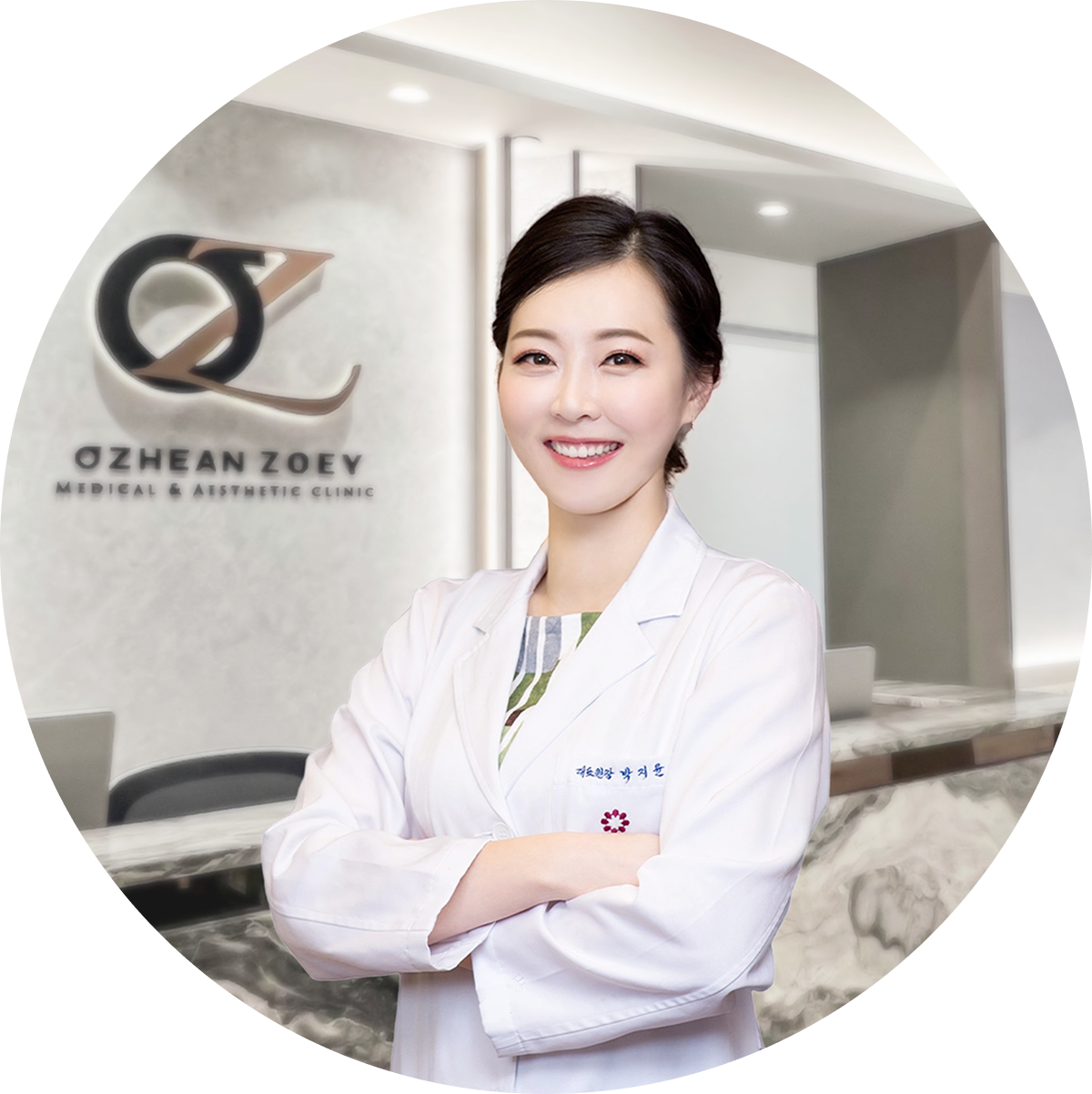
About Dr. Park Ji-Youn
Dr. Park Ji-Youn
Dr. Park Ji-Youn is a Korean board-certified dermatologist, founder and director of the Ozhean Skin and Plastic Surgery Network, and Group Medical Director of the Ozhean Group. She has authored over 30 scientific papers on dermatology and created Ozhean’s signature SKIN FIT programme, which has benefitted more than 20,000 patients across Korea, Singapore, and Malaysia. Dr. Park believes in personalised, evidence-based aesthetic treatments that enhance natural beauty — particularly for Asian skin.


